Every exterior commercial painting project represents a real financial commitment. That investment can fail far sooner than it should when weather is left out of the planning equation. Knowing how to protect commercial exterior paint starts with understanding what weather actually does to a coating. It also means building a plan before damage shows up.
This post covers the main causes of exterior paint failure on commercial buildings. It explains what weather damage paint looks like early on. And it outlines what a solid commercial paint maintenance plan does to extend the life of your building’s coating. Whether you are managing your first exterior commercial painting project or your tenth, these are things worth knowing before the brush hits the wall.
Key Takeaways:
- UV rays, moisture, and freeze-thaw cycles are the leading causes of exterior paint failure on commercial buildings.
- Weather damage paint problems often begin as small surface issues before they turn into larger repairs.
- A scheduled commercial paint maintenance plan reduces long-term repainting and repair costs.
- Knowing how to protect commercial exterior paint matters before the first coat goes on, not after the exterior commercial painting project wraps.
- Early identification and repair costs far less than substrate replacement.
What Weather Does to Commercial Exterior Paint
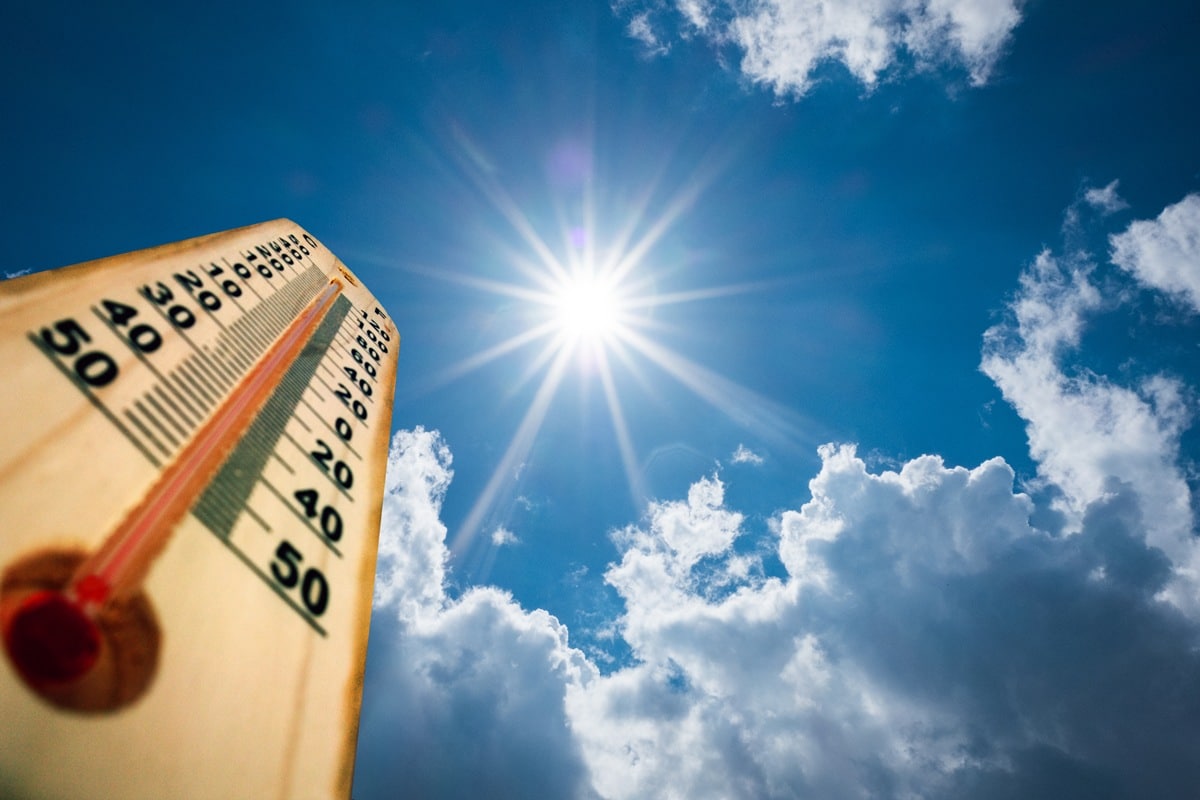
Paint on a commercial building faces steady pressure from outside forces. Sun, rain, wind, and cold do not always strike at once. But together, over time, they break down even well-applied coatings.
Here are the main contributors to exterior paint failure:
UV Rays
The sun’s ultraviolet rays break down the binders in exterior paint. Those binders hold the pigment and film together. When they degrade, the paint chalks, fades, and eventually flakes. On a commercial building with large sun-exposed walls, UV-related exterior paint failure can show up within three to five years when the wrong product or finish was selected.
Moisture
Water is one of the most damaging forces for exterior coatings. Rain, humidity, condensation, and ice work their way into small cracks in the film. Once moisture gets behind the paint, it causes bubbling and peeling. Over time, it leads to rot or rust in the substrate. This type of weather damage paint is especially common in coastal areas and regions with heavy annual rainfall.
Freeze-Thaw Cycles
In colder climates, water trapped in the paint film or substrate expands when it freezes. That expansion causes cracking and spalling. It can spread quickly from a single spot to large sections of wall. One hard winter can turn a minor paint problem into a major repair project.
Wind and Debris
High winds carry dirt, sand, and debris that scour the paint surface. This mechanical wear thins the coating, especially on corners and exposed edges. When the film gets thin, moisture and UV rays move in much faster.
The Real Problem for Commercial Property Managers
Managing a commercial property means balancing a long list of priorities. Exterior paint rarely rises to the top of that list. It only becomes urgent when the problem cannot be ignored anymore. By that point, the cost is higher. The disruption is larger. Questions come from ownership, tenants, or boards asking how things got this far.
That is the quiet nature of exterior paint failure. It does not announce itself early. It starts as a small bubble near a window frame, a dull patch on a south-facing wall, or a hairline crack along a parapet cap. Property managers without a commercial paint maintenance schedule often miss these signs until they have already grown.
This is the real difficulty: not that paint is peeling, but that there was no system in place to catch it sooner.
Knowing how to protect commercial exterior paint is not only a technical matter. It is a planning matter.
A Three-Step Plan for Commercial Paint Maintenance
A solid commercial paint maintenance approach has three parts. The first is inspection. The second is early repair. The third is a product strategy matched to your local climate.
Step 1: Schedule Annual Inspections
A qualified painting contractor can walk your property once a year. They flag signs of weather-damaged paint before they spread. They look for bubbling, chalking, adhesion failure, rust staining, and film cracking. This annual inspection costs far less than a full repaint.
Step 2: Repair Before the Next Season
When a contractor finds exterior paint failure in one area, address it before the next wet or cold season. Spot repairs done on a regular cycle cost far less than a full repaint triggered by years of deferred work.
Step 3: Match Products to Your Climate
Not all exterior paints perform the same in every environment. In high-UV regions, coatings with UV-resistant pigments hold up better. In wet climates, vapor-permeable coatings reduce moisture buildup behind the film. A qualified contractor should recommend specific products based on your region, your exposure, and your substrate type.
According to Sherwin-Williams, commercial exterior coatings are formulated to resist fading, chalking, and peeling under sustained environmental exposure. Selecting the right product for your conditions is one of the most direct factors in how to protect commercial exterior paint over the long term. For product-specific information, visit the Sherwin-Williams exterior paint and primer page.
How to Protect Commercial Exterior Paint Starting With Your Next Exterior Commercial Painting Project
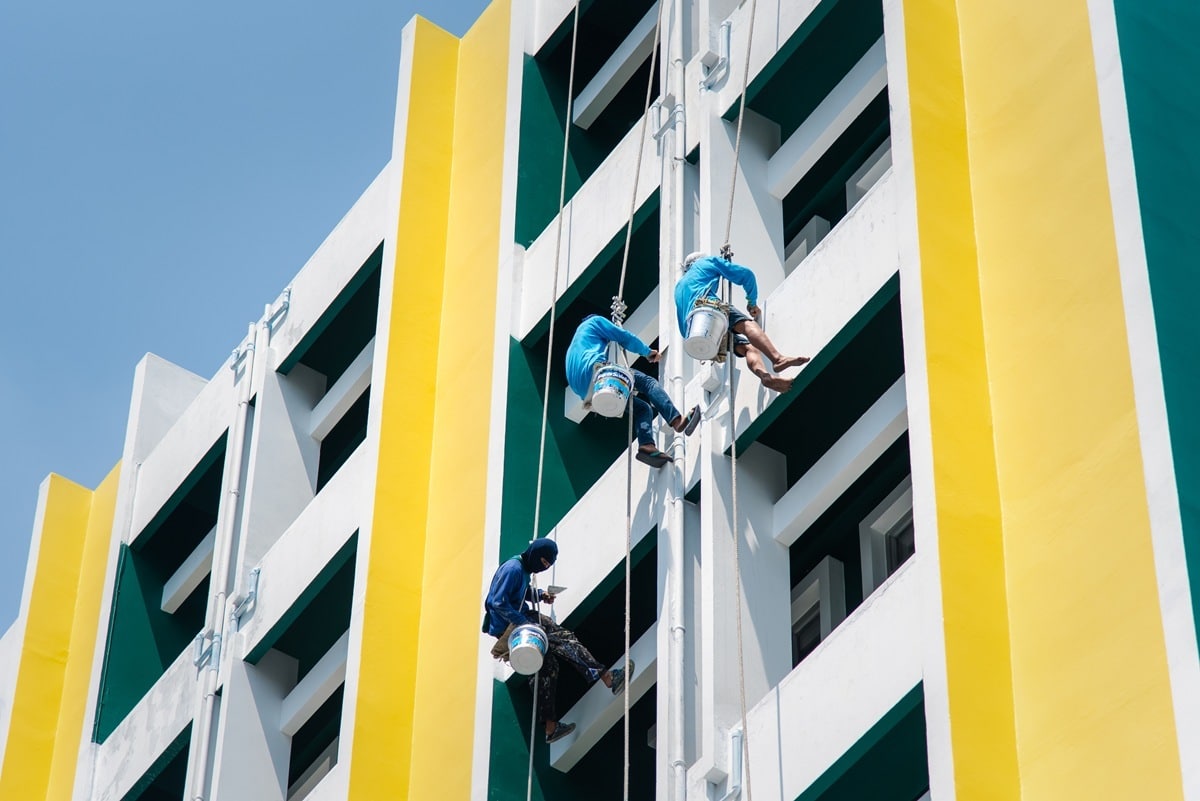
Every exterior commercial painting project is a chance to make the next repainting cycle longer. Here is what separates coatings that hold up from those that do not:
Surface Preparation
Moisture, dirt, and old failing paint on the surface cause new coatings to break down faster. A thorough pressure wash, followed by scraping, sanding, and priming, gives the new paint a clean surface to bond to. Skipping prep is one of the most common reasons an exterior commercial painting project underperforms.
Primer Selection
The right primer fills small surface gaps and seals porous substrates. It also improves topcoat adhesion. On metal substrates, a rust-inhibiting primer directly affects how the coating holds up against weather damage paint. Primers are not optional on commercial buildings.
Film Thickness
Paint applied too thin fails sooner than rated. Manufacturers publish recommended dry film thickness for a reason. A coating applied at the correct thickness performs closer to its listed lifespan.
Application Conditions
Paint applied in the wrong conditions does not cure correctly. Too hot, too cold, or too humid means early failure. A qualified contractor follows manufacturer specifications on temperature and humidity ranges before any exterior commercial painting project begins.
What Happens When Commercial Paint Maintenance Gets Skipped
When commercial paint maintenance is skipped for too long, the problem moves past paint. Exposed substrates such as concrete, wood, metal, and composite panels absorb moisture and start to break down. Rust forms. Wood rots. Concrete cracks and spalls. What started as exterior paint failure becomes a substrate repair job. Substrate repairs cost far more than a timely repaint would have.
For a commercial property manager, the math is not complicated. A proactive commercial paint maintenance schedule is a lower-cost path than reactive repairs following years of weather damage paint exposure. Before your next exterior commercial painting project, a maintenance review is worth doing.
Ready to Put a Plan in Place?
Pivotal Painting, LLC helps commercial property managers protect their buildings with a plan that actually works. We assess your building’s current condition. We identify early signs of weather damage paint and exterior paint failure. We build a commercial paint maintenance schedule around your property and your budget.
If you want to know how to protect commercial exterior paint on your specific building, we can start with a site walkthrough and a written assessment. No obligation. Just clear information you can act on.
Call us today at 360-230-7994.