
Walk around almost any neighborhood and you can pick out the homes due for a coat of paint, which is part of why so many owners start asking how often to paint house exterior walls before another summer rolls through. The bigger question sitting under that one is how long does exterior paint last on a house like yours, because the answer tells you whether you are about to repaint too early, wait too long, or hit the timing right. Paint is not only color. It is the layer keeping water, sun, and weather off the wood, stucco, and trim underneath. So the lifespan of that layer is really a question about how well your home stays protected.
Here is the honest version most sales pitches skip: there is no single number. A wood cottage in full sun ages on a different clock than a brick colonial shaded by oak trees. Still, the ranges are well documented, and once you know the seven factors that move them, you can read your own house instead of taking anyone’s word for it.
Key Takeaways:
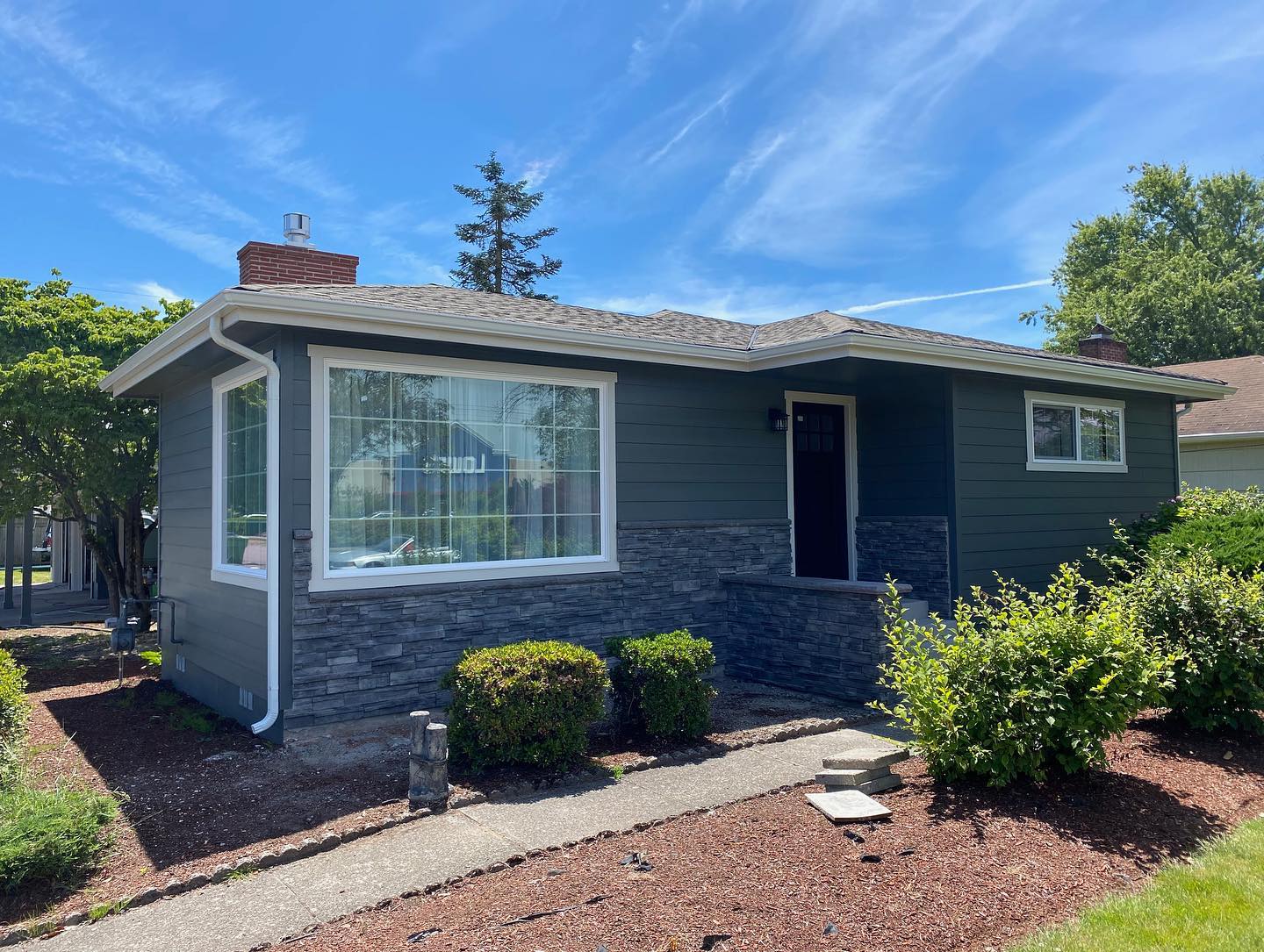
So How Long Does Exterior Paint Last?
Start with the baseline. Paint maker Sherwin-Williams puts the typical exterior repaint cycle at seven to ten years, depending on climate and the products used. That is a fair midpoint, but the surface under the paint shifts it a lot.
Wood siding tends to hold paint for three to seven years, because wood swells and shrinks with the weather and stresses the film. Stucco usually runs five to ten years. Fiber cement board, like James Hardie, often reaches ten to fifteen. Painted brick can go fifteen to twenty. None of these are promises. They are starting points you adjust based on the next seven factors. Climate stacks on top of all of it. A home in a hot, sunny, coastal area will land at the short end of every range, while a sheltered house in a mild climate drifts toward the long end.
The 7 Things That Decide How Long Exterior Paint Lasts
- 1
The sun. This is the big one. Ultraviolet light slowly breaks the chemical bonds in paint, which damages both the color pigments and the binder holding everything together. The result is paint fading first, then a chalky, brittle surface. Walls that face south get hit hardest because they collect the most direct light all day long.
- 2
Your color choice. Deep reds, navies, and blacks soak up more light and heat, so they fade sooner than soft whites and grays. The pigment chemistry matters too. Some pigments hold up to sun far better than others, which is why two cans at the same price can age very differently.
- 3Moisture. Rain, humidity, and lawn sprinklers all push water at your walls. When moisture gets under the film, you start to see paint blistering, peeling, and mildew. Sun and water working together age a finish faster than either one does alone.
- 4Surface prep. Here is where most early failures actually start. Paint needs a clean, dry, sound surface to bond to. New stucco and bare wood have to cure and get primed first. Painting over dirt, chalk, or damp wood traps trouble underneath, and even premium paint will let go within a year or two. Prep is the unglamorous part, and it is the single biggest thing inside your control.
- 5Paint quality. Better exterior paints carry tougher binders and more pigment, so they keep color and flex through temperature swings. Cheaper paint can save money on day one and cost you a repaint years early. Even so, expensive paint over bad prep still fails. A paint job is only as strong as its weakest step.
- 6Your siding material. As the ranges above show, the substrate sets the pace. Wood asks for the most attention. Brick and fiber cement ask for the least. Knowing what you have tells you which end of the timeline to plan around.
- 7
Heat and temperature swings. Big daily swings make siding expand and contract, and the paint film has to stretch and shrink right along with it. Over the years, that movement, paired with sun-dried brittleness, shows up as cracking, especially on trim and doors that catch full sun.
How to Tell It Is Time, Without Guessing
It is easy to feel stuck here, caught between a contractor who says repaint now and a budget that says wait. The good news is you can settle the question yourself, with your own eyes and about ten minutes.
Walk the house slowly. Look for color that has gone flat or uneven, with the sunny sides noticeably lighter than the shaded ones. Run your hand along the siding. If it comes away with a fine, chalky powder, the top of the paint has worn through and the protective layer is thinning. Check for hairline cracks, lifting edges, and small bubbles, which point to moisture or a bond starting to give way. Look at the caulk around windows and doors. Once it splits or pulls back, water has a clear path inside.
One honest look beats a calendar. If the surface feels sound at year eight, you may have time to spare. If it is chalking and cracking at year four, your clock simply ran faster than average, and waiting mostly buys you repair bills. Fading, chalking, cracking, and blistering are the exterior paint problems that tend to show up first, and each one is easier to handle early.

What Actually Makes Exterior Paint Last Longer
A handful of choices stretch the life of a paint job more than anything else.
Prep the surface properly. Clean it, let it dry, scrape what is loose, and prime the bare spots. The same paint maker’s exterior prep guidance points out that new surfaces need to cure first and that painting in the wrong conditions, too cold or too damp, weakens the film before it ever protects anything. Pick a quality exterior paint rated for your siding. Choose your color with exposure in mind, leaning lighter on the walls that bake in afternoon sun. Then keep up with it. A gentle wash once a year clears the dirt and mildew that quietly grind down a finish.
None of this takes special talent. It takes doing the boring steps in the right order, which is exactly what gets skipped on a rushed job. That is also why two houses painted the same summer can look worlds apart five years later.
Talk to a Pro Before You Guess
If you want a straight answer for your specific house, that is worth a short conversation. The team at Pivotal Painting, LLC will walk your exterior, check the surfaces aging fastest, and tell you honestly whether you are looking at this year, next year, or a few more after that. No push to paint before you need to.
Call Pivotal Painting, LLC at 360-230-7994 to set up an exterior assessment. You will get a clear read on the condition of your paint, a realistic timeline, and a plan built around protecting your home rather than padding an invoice. The sooner you know where your paint stands, the easier it is to keep small wear from turning into real repair work, and the more control you have over what you spend and when.