Here’s the thing about solid wood cabinets: the boxes often outlast their finish by 20 years or more. So when the finish starts to look dated, the smarter money is usually on painting or staining cabinets you already own instead of tearing them out. The trouble is the choice itself. Cabinet painting vs staining gets sold online as a quick style call, when it’s really a decision you’ll look at every single day for the next decade.
That’s a lot of pressure for two paint cans. And most articles make it worse. They hand you a tidy chart, crown a winner, and skip the part that actually matters: which finish fits the wood you have, the way you cook, and how long you plan to stay in your Ridgefield home.
Let’s fix that.
Key Takeaways:
Cabinet Painting vs Staining: What Actually Changes
Strip away the noise and one difference does the heavy lifting. Stain soaks into the wood and lets the grain show through. Paint sits on top and hides it.
Everything else follows from that.
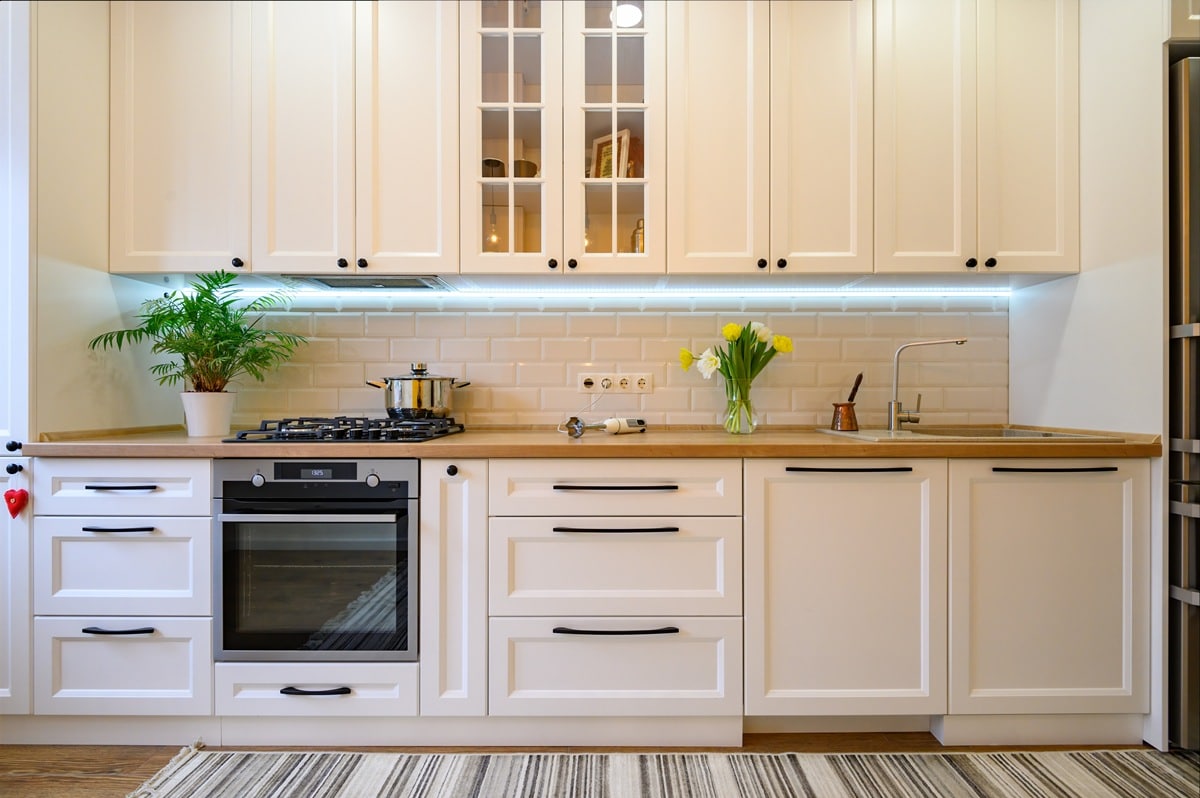
Paint gives you a smooth, even color and a near-endless palette: soft white, warm greige, deep navy, sage. It suits clean, modern kitchens and lets you match cabinets to walls or hardware. The catch is that paint sits on the surface, so chips, dings, and wear near handles and the range tend to show.
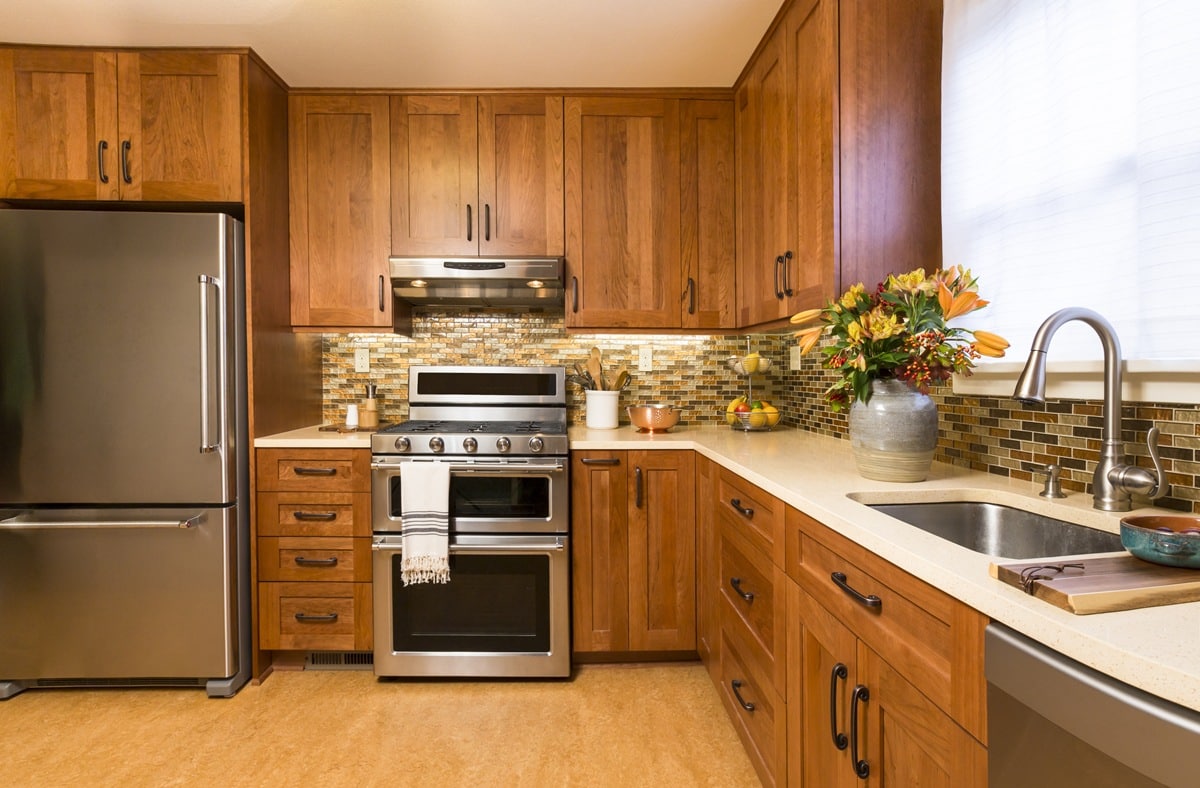
Stain keeps the natural character of oak, maple, cherry, or alder. The grain hides minor scuffs, which is why stained cabinets often look better longer in a busy kitchen. The trade-off is that you’re limited to wood tones, and stain can’t cover deep flaws or fix a wood color you never loved in the first place.
One hard line worth knowing: stain only works on real wood. If any of your cabinet parts are MDF, laminate, or thermofoil, paint is the only finish that will take. A quick look from a pro tells you what you’re working with before you spend a dime.
The Real Question Isn’t Which One Lasts Longer
When people compare cabinet painting vs staining, durability usually tops the list. And most articles crown stain the winner. Stained finishes can hold 20 to 30 years. Painted finishes often need a redo closer to the 10-year mark. Those numbers are real.
But they hide the part that decides your outcome.
Lifespan has less to do with paint vs stain and more to do with prep and application. A brushed-on weekend coat over greasy, unsanded doors will peel no matter which product you pick. A finish that gets cleaned, sanded, primed, sprayed, and cured properly holds up for years, paint included. The product matters. The process matters more.
So when you weigh painting or staining cabinets, the better question isn’t “which lasts longer?” It’s “who’s doing the work, and how?” That question protects your money far better than any spec sheet.
What Painting or Staining Cabinets Costs
When it comes to painting or staining cabinets, cost usually tilts toward stain. A full professional repaint tends to run higher than a re-stain of the same kitchen, mainly because paint needs more prep, a primer coat, and multiple finish coats to look right. According to national cost data, refinishing a kitchen’s cabinets covers a wide range depending on size, wood type, and how much stripping the old finish needs.
Two things move that number more than the paint-or-stain decision:
Either way, refinishing costs a fraction of new cabinets. That’s why so many homeowners refinish solid boxes that are still in good shape rather than replace them. It’s the main reason painting or staining cabinets stays popular even as kitchen styles shift.
How to Choose: Four Honest Questions
Skip the chart. Run your kitchen through these four questions instead. They settle the cabinet painting vs staining question faster than any comparison table.
On trends: natural wood grain has been climbing in popularity. The National Kitchen & Bath Association reports that wood-forward, organic finishes have been gaining ground, with white no longer the automatic default it was a decade ago. Good context to have. Just don’t let a single year’s trend pick a finish you’ll live with for ten.
Where Cabinet Painting vs Staining Decisions Go Wrong
When painting or staining cabinets goes sideways, a few patterns cause most of the regret:
Dodge those four and you’ve avoided most of the ways this goes sideways.
A Kitchen You Actually Like Walking Into
The goal was never “paint” or “stain.” It’s a kitchen that feels right, where the cabinets look intentional, hold up to real life, and don’t nag you with second thoughts every time you make coffee.
That comes from matching the finish to your wood, your habits, and your timeline, then having it applied by someone who preps and sprays it to last. Get those right and the whole cabinet painting vs staining question stops feeling like a gamble and starts feeling like a plan.
This is the part Pivotal Painting, LLC handles every week. The team starts with an in-home look at your actual cabinets, checking the wood, the wear, and the light in your kitchen, then lays out a straight recommendation with real numbers. No push to replace what’s already working. No guesswork left on your end.
If you’re weighing painting or staining cabinets in Ridgefield or any of the surrounding areas, call Pivotal Painting, LLC at 360-230-7994 for an in-home cabinet finish assessment. Bring your questions and your toughest doubts. You’ll walk away knowing which finish fits your kitchen and what it costs, before you commit a single dollar.