Picking a color for your kitchen cabinets is the fun part. Picking the cabinet paint sheen is the part that actually decides how those cabinets look and hold up five years from now. As the owner of Pivotal Painting, LLC, I hear questions about the best sheen for kitchen cabinets almost as often as I hear questions about color. Both deserve equal attention. A sheen that looks great on a paint chip can act very differently once it sits on a door that opens forty times a day. Our cabinet painting services always start with this exact conversation. The wrong sheen can make a brand-new paint job look tired within a year.
What Cabinet Paint Sheen Actually Means
Sheen is the amount of light a dried paint bounces back at you. Low shine looks soft and flat. High shine reflects light and starts to act like a mirror. The Painting Contractors Association notes that pros measure sheen with a glossmeter set at a grazing angle. In plain terms, this is a real, testable trait, not just a look you guess at. That one trait, shine, drives almost every tradeoff you will read about below.
Cabinets are not walls. People touch them, bump them, wipe them, and splash them all day long. That daily contact is why the sheen decision carries more weight here than almost anywhere else in your home.
Matte, Satin, and Semi-Gloss, Side by Side
Most cabinet finishes fall into three groups. Each one trades a bit of one benefit for more of another.
| Sheen | Look | Durability & Cleaning | Hides Flaws? | Best For |
|---|---|---|---|---|
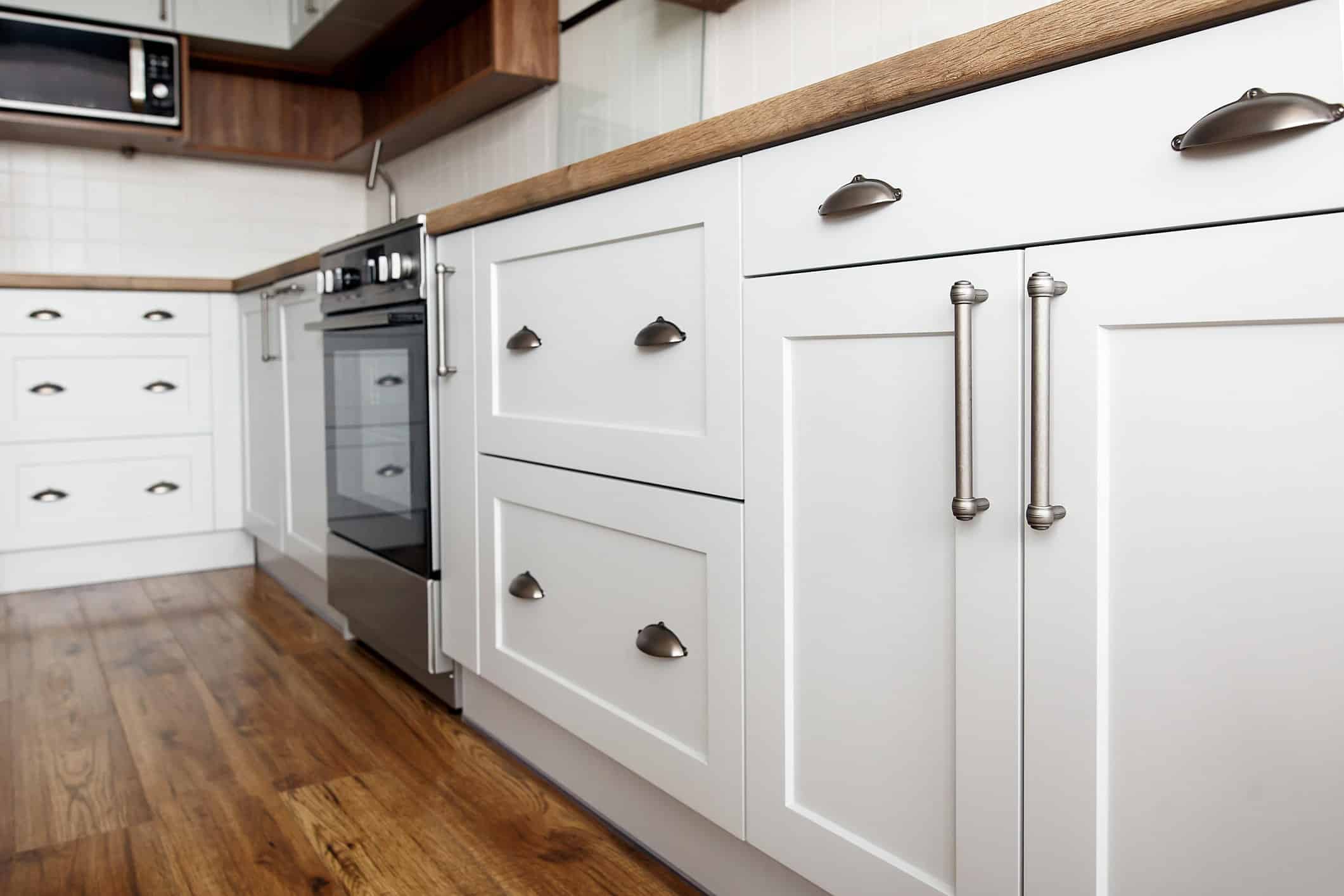
| Matte/flat | Soft, no shine | Lowest; marks show fast with handling | Best at hiding brush marks and wood grain | Low-traffic accent cabinets, islands |
| Satin | Subtle glow | Good; wipes clean with little effort | Hides minor flaws | Full kitchens, most cabinet boxes |
| Semi-gloss / gloss | Crisp, reflective | Highest; sheds grease and water | Shows nearly every flaw | Doors, drawer fronts, high-touch spots |
One rule stays true across every kitchen we paint. As shine goes up, cleaning gets easier, but the finish also shows off every dent, drip mark, and old scratch. A cabinet door that looks flawless in satin can look rough in high gloss if prep work was skipped. That is exactly why our crew never picks a sheen before we see the actual cabinets in person, up close, and under real light.
Why Cabinet Sheen Matters More Than Wall Sheen
A kitchen wall gets painted, then mostly left alone. A kitchen cabinet gets grabbed, leaned on, and splashed with water, oil, and sauce every single day. That gap alone changes the math on which sheen makes sense for your kitchen.
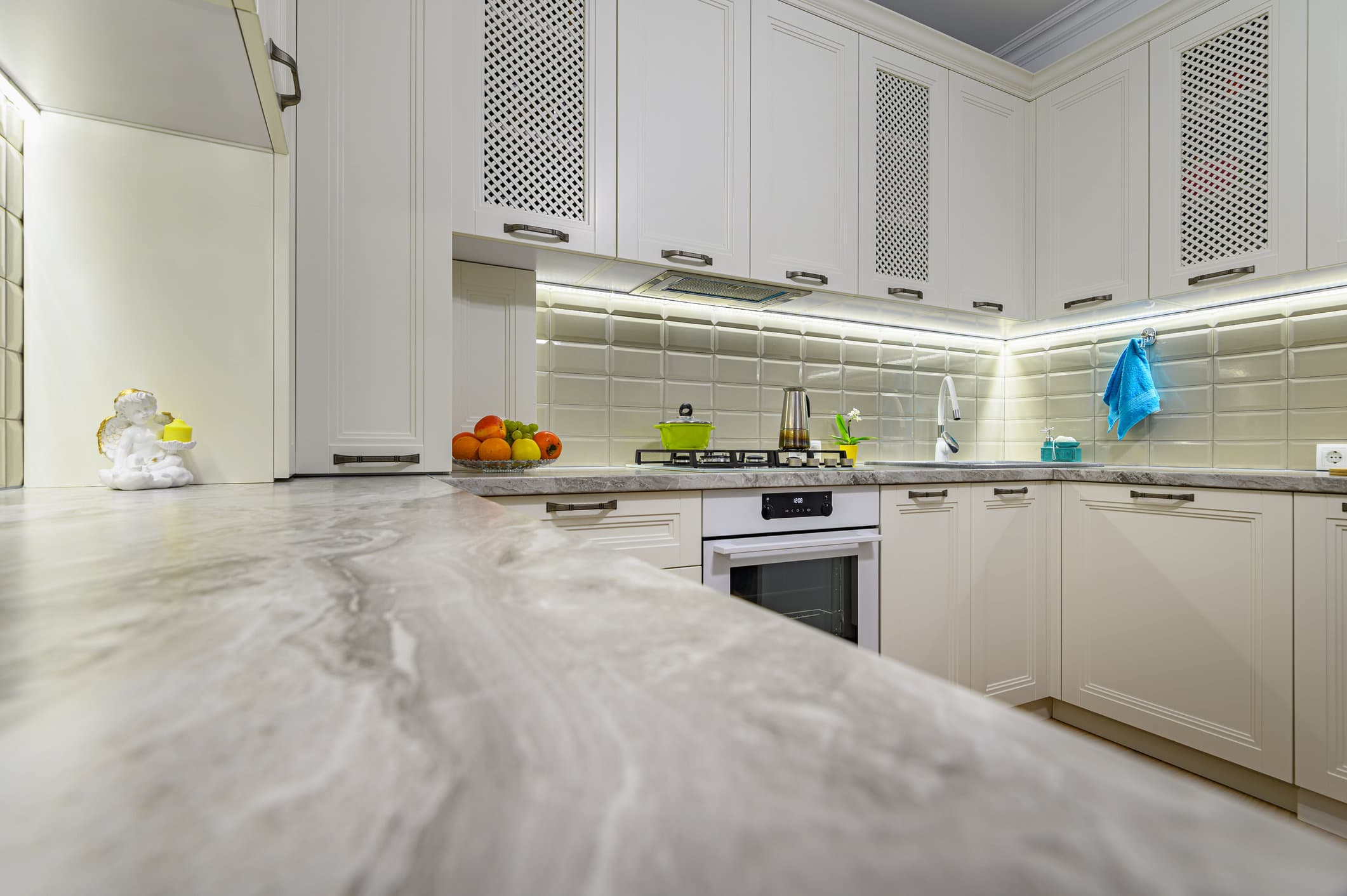
Moisture plays a bigger role than most homeowners expect. The EPA points out that everyday tasks like cooking and washing dishes raise indoor humidity, and it recommends running kitchen exhaust fans to manage that moisture. Your cabinets sit right in the middle of that daily swing, especially the boxes closest to the sink, dishwasher, and stove. A finish with some shine sheds that moisture better than a dead flat finish. That is one reason satin and semi-gloss show up in real kitchens far more often than they show up in flat-finish showroom photos.
Bathrooms deal with a similar problem. Vanities sit close to sinks and showers, so the same humidity math applies there too. Homeowners who paint a bathroom vanity with flat paint are often surprised by how quickly it starts to look dingy near the faucet.
There is also a simple cost angle here. A cabinet repaint is a lot cheaper than a full cabinet replacement, but it still takes real time and real materials. Picking the wrong sheen the first time means paying for that time and those materials twice. A short conversation up front about how your kitchen actually gets used almost always costs less than a redo down the road.
Matching Sheen to Each Part of Your Cabinets
Your cabinets are not one single surface. They do not need one single sheen either. Here is the starting point my crew uses on real kitchens across the Ridgefield area.
| Cabinet Area | Suggested Sheen | Why |
|---|---|---|
| Cabinet boxes and frames | Satin | Balances a clean look with everyday wipe-down durability |
| Doors and drawer fronts | Satin or semi-gloss | Takes the most handling, so it needs the most durability |
| Cabinet interiors | Matte or satin | Lower shine hides small flaws you will rarely see anyway |
| Island or accent cabinets | Matte, satin, or semi-gloss | More a style call than a durability one, since it sees less daily contact |
A common move is to step the doors up one level of shine from the boxes. If your cabinet frames are satin, a semi-gloss door gives you sharper contrast and an easier wipe-down around the handles. Paint manufacturers publish their own sheen guidance for each application, and it tends to match what actually holds up in real homes.
How We Help You Pick the Best Sheen for Kitchen Cabinets
Choosing a sheen off a chart is the easy part. Choosing the one that fits your exact cabinet material, your kitchen’s light, and how hard your family uses that kitchen takes a trained eye. That is the part my team handles on every project, start to finish.
Here is how the sheen decision works when you book our cabinet painting service:
- 1
We inspect your cabinets in person and check the material, whether it is wood, laminate, or MDF.
- 2
We ask how your household actually uses the kitchen, since a house with young kids gets treated differently than a quiet weekend kitchen.
- 3
We show you real samples side by side so you can compare matte, satin, and semi-gloss under your own kitchen lighting.
- 4
We write the sheen into a clear, itemized estimate before we start, so there are no surprises halfway through the job.
Seeing real samples in your own kitchen, under your own lights, clears up almost all the guesswork before you commit to a can of paint. A color can look crisp in gloss and look completely different in satin, because shine changes how your eye reads the pigment underneath it.
Sheen Mistakes Worth Avoiding
A few mistakes come up again and again on cabinet jobs. Knowing them now can save you a repaint later.