
You’re standing in a friend’s kitchen, coffee in hand, staring at her cabinets. Something looks off. Then it hits you: brush marks. Long, faint lines run down each door and catch the light at certain angles. She paid a contractor $4,000 last spring. Now she lives with an uneven cabinet paint finish nobody warned her about. So why do painted cabinets look streaky in the first place, and how can you avoid hiring the wrong cabinet painter?
Here is the truth most contractors will not tell you. Streaky cabinets are almost never a paint problem. They are a process problem. A skilled cabinet painter can turn a $40 gallon into a factory-smooth finish. But a sloppy one can ruin a $130 gallon of premium urethane. The difference comes down to prep work, product choice, and technique. So anyone Googling “why do painted cabinets look streaky” after a costly cabinet paint job already senses the issue is not the paint.
Key Takeaways:
- An uneven cabinet paint finish is usually caused by skipped prep, wrong products, or poor technique.
- Professionally painted cabinets should last 8 to 15 years with proper care, according to industry data.
- A real cabinet painter removes doors, sands, primes, and sprays in a controlled space.
- The average cabinet paint job runs $2,000 to $6,500, so vetting matters.
- Always ask a cabinet painter about their primer, sprayer, and cure time before you sign.
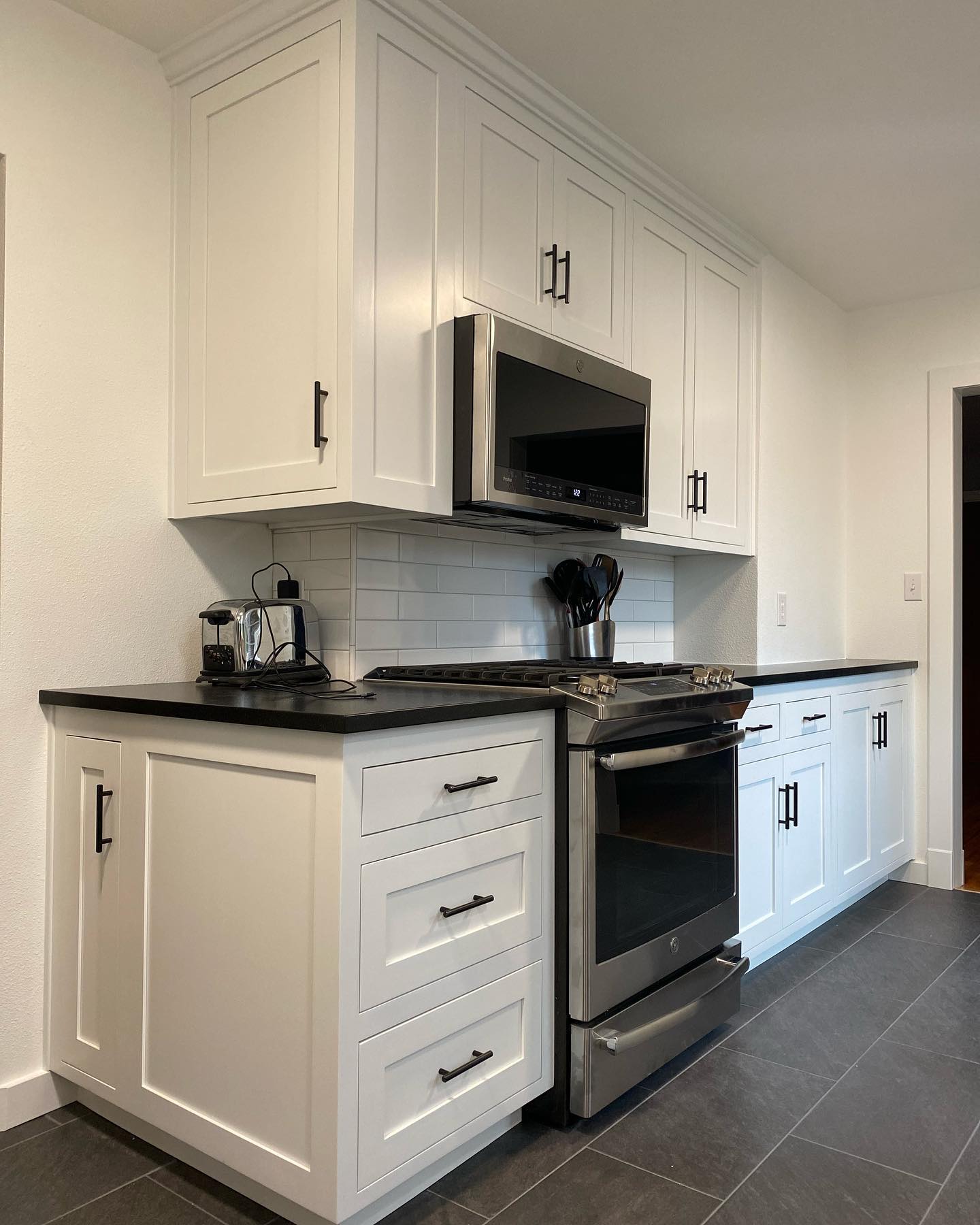
Why Do Painted Cabinets Look Streaky? Three Hidden Causes
First, cabinet doors live a hard life. Grease from cooking, splashes from cleaning, and oils from hands build up on the surface over years. Then a painter rolls fresh paint over that buildup without cleaning it first. The new coat cannot bond to the wood. So the paint slides, drags, and dries with visible streaks. That alone explains an uneven cabinet paint finish on plenty of jobs.
Second, the paint itself is the cause. Cabinet paint is thick. It is built to self-level, which means it flows out and smooths itself when applied correctly. But thick paint is also unforgiving. Apply too much in one pass, or brush the wrong direction. The finish then ridges up. Those ridges read as an uneven cabinet paint finish once the paint cures.
Third, the cause is environmental. Paint dries based on humidity, temperature, and airflow. So a garage in August and a basement in February produce different results from the same can. A real cabinet painter controls those factors. But a weekend hire usually does not.
Skipped Prep Work Is the Top Culprit
Prep work is where most streaky cabinet paint jobs are lost before the first coat goes on. First, doors need to come off and be labeled. Then they need to be degreased with a kitchen cleaner. Next, they get sanded to break the existing finish. Finally, they get wiped clean of dust. Each prep work step matters. Skip the degreasing, and grease bleeds through. Skip the sanding, and the paint does not grip. Skip the dust wipe, and you get raised specks that show up as streaks.
Industry pros also fill nail holes, dings, and grain lines before priming. But many bargain crews skip this step. According to paint experts, skipping or rushing surface prep often leads to adhesion problems. This is even worse with flat or matte finishes that show every imperfection. So a real cabinet painter walks you through their prep work checklist without hesitation. If they cannot, you have your answer to why do painted cabinets look streaky on so many bargain jobs.
Here is a good question to ask: “Do you remove the doors and drawer fronts and spray them flat?” Spraying can work for cabinet boxes. But doors should always come off.
The Wrong Paint or Wrong Tools
Not all cabinet paint is built for cabinets. Wall paint, even high-end wall paint, is too soft. It scratches, chips, and shows fingerprints within months. So a real cabinet painter uses a urethane, alkyd, or 2K coating made for high-traffic surfaces. Brands like Sherwin-Williams Emerald Urethane and Benjamin Moore Advance are common picks. These products dry harder, level better, and resist kitchen wear.
Tools matter just as much. A homeowner with a brush from the hardware store will almost always leave streaks. But a pro uses an HVLP sprayer or fine-finish airless rig in a clean, controlled space. Industry experts at Pittsburgh Spray Equipment note that spraying provides the smoothest finish for cabinets. They also recommend HVLP turbine systems and fine-finish airless tips like the 309, 313, or 315. So if a cabinet painter shows up with a $30 brush and a quart of latex, you already know what your finish will look like.
That is another big reason an uneven cabinet paint finish lands on so many kitchens. Cheap rollers shed fibers. Worn brushes drag bristles through wet paint. Plus, wrong sprayer tips spit paint instead of atomizing it. Each shortcut creates the streaks you are trying to avoid.
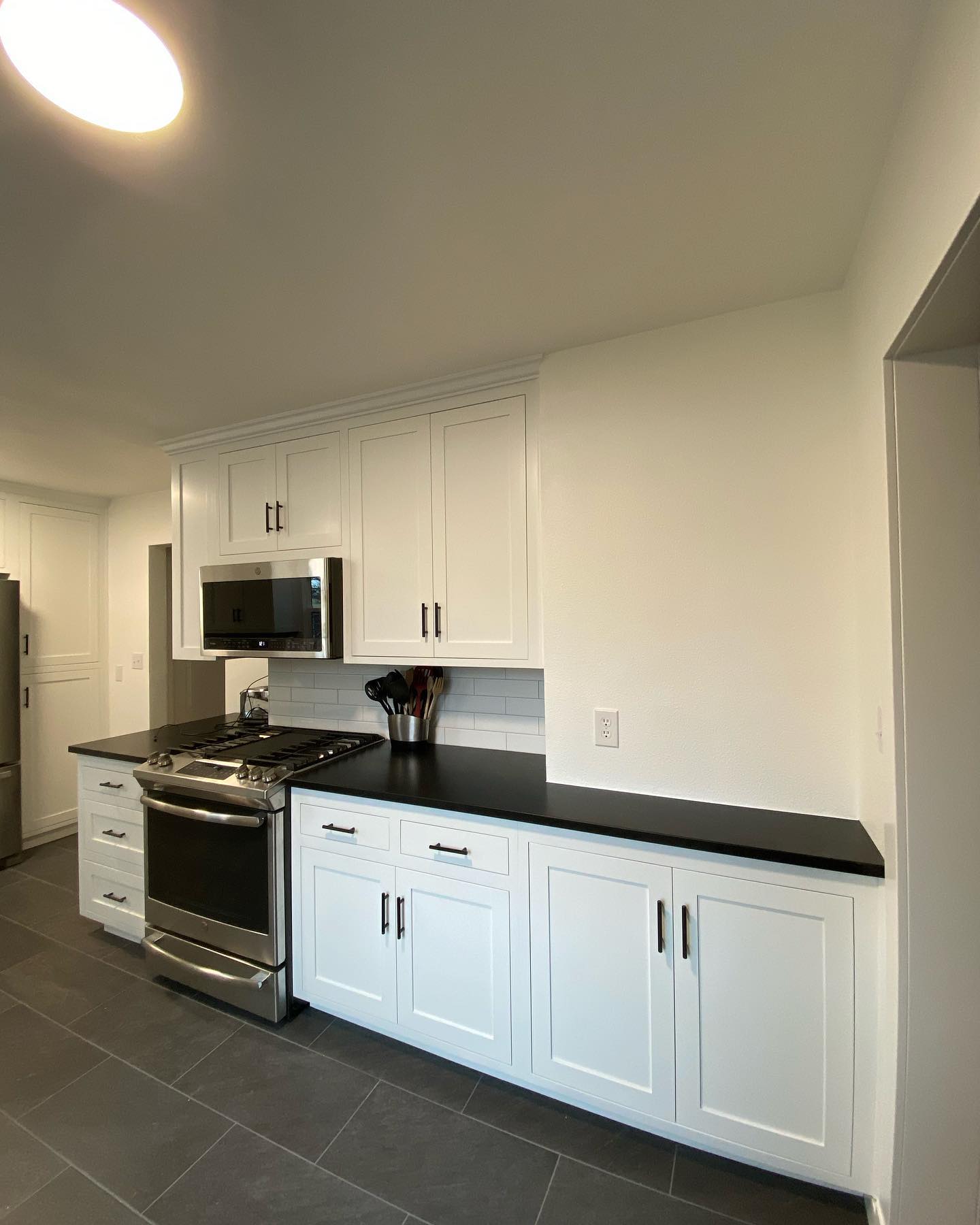
Why Do Painted Cabinets Look Streaky After Spraying?
Even with great products and clean prep work, a cabinet paint job can fail at the spray stage. Three errors cause most of the trouble.
First, overloading the brush or roller. Thick coats look full at first. But they sag, run, and pool at the edges. So two thin coats beat one thick coat every time. Second, going back over paint that has started to dry. Cabinet enamels have a short open time, often 5 to 15 minutes. Brushing through partially-dry paint creates roping marks. These marks then harden into permanent streaks. Third, painting in the wrong conditions. High humidity slows drying, traps moisture, and leaves an uneven cabinet paint finish that no second coat can hide.
Curing is its own trap. Paint feels dry to the touch in a few hours. But it does not fully cure for 21 to 30 days. Hanging doors too soon, or stacking them, leaves dents and ridges. Then those marks show up as an uneven cabinet paint finish for years. A cabinet painter who cares explains their cure schedule before any work starts. So if they hang doors the same day they paint them, walk away.
How to Vet a Cabinet Painter Before You Sign
Spotting a cabinet painter who knows their craft is simple when you know what to ask. So anyone wondering why do painted cabinets look streaky after hiring a pro can avoid the trap. Just ask these five questions first.
- What products do you use for primer and topcoat, and why?
- Do you remove doors and drawer fronts and spray them flat?
- What is your prep work process for grease and old finish?
- How long should I wait before stacking dishes or closing doors fully?
- Can I see five recent cabinet paint job photos with homeowner contact info?
A real pro answers these without flinching. But vague answers, hedging, or pressure to skip references all point in the same direction. So the cabinet painter who built their business on quality work has nothing to hide.
What a Cabinet Paint Job Should Cost
Pricing tells you a lot about what you are getting. According to HomeGuide’s 2025 cabinet painting cost data, the average cabinet paint job runs $30 to $70 per linear foot. The total range falls between $2,000 and $6,500. Most projects take 3 to 5 days and last 8 to 15 years when maintained well. So quotes well below that range usually mean shortcuts on prep work, paint, or labor. An uneven cabinet paint finish is the symptom.
A fair quote covers the labor of a multi-day project, premium cabinet-grade products, and professional spray equipment. It also covers a clean, controlled work area. But the biggest factor is the painter’s experience. That is the part that decides whether your kitchen looks factory-finished or homemade.
Hire a Cabinet Painter Who Sweats the Details
Now you know why do painted cabinets look streaky on so many jobs. You also know what to ask before you sign anything. Streaky cabinets are not bad luck. They are the result of a contractor who skipped a step, used the wrong product, or rushed the cure. So you do not have to gamble on your kitchen. Pivotal Painting, LLC approaches every cabinet paint job with a written prep work checklist and premium urethane finishes. We also use professional spray equipment and a cure schedule that protects your investment for years. Call us at 360-230-7994 for a free walkthrough and a written quote that explains every step. Your cabinets are worth doing right the first time.